
Follow Sumter County's Address-to-Owner Route
A reliable answer here matches the tax parcel with its recorded transfer. The Americus-Sumter GIS or qPublic shows the displayed owner, while GSCCCA supplies the deed index. Carry the parcel number and land description between the two so a similar name or address does not point you to the wrong tract of Sumter County land.
- Search the address in the Americus-Sumter GIS viewer and select the parcel.
- Record `PARCELID`, `FULLOWNERNAMES`, the mailing address, legal description, sale date, grantor and grantee.
- Find the newest transfer in the GSCCCA Real Estate Index and compare its grantee and description.
- If an entity owns it, verify the public entity record and use the roll mailing address for lawful contact.
Read Sumter County's Exact Owner Field
Sumter County's public tax-parcel layer labels its owner field `FULLOWNERNAMES` as "Owner Name." Component fields `OWNERNME1` through `OWNERNME4` can hold pieces of the entry. Around them sit the situs address and postal address. Nearby are `GRANTOR`, `GRANTEE`, `SALEDATE`, `SALEPRICE`, and the subdivision and property description. Together these fields pin down the intended parcel, since one surname match is rarely enough.
The GIS Tax Parcels layer allows public queries. A blank transaction field only means the layer returned no value. It does not mean no transfer occurred. The deed index remains the confirmation step for ownership.
Separate a Sumter Situs From Owner Mail
`SITEADDRESS` describes where the land sits. `PSTLADDRESS` shows where owner mail goes. It carries a postal city, state, and ZIP. The two often differ. An owner may live elsewhere, or use a post-office box. Some receive correspondence through an estate or business entity. That gap is normal. It signals neither an occupant nor a mistake.
Before a purchase inquiry, estate matter, or boundary dispute, copy the mailing address exactly. Then verify its parcel number. Never assume the postal recipient lives on the subject land in Sumter County.
Note: The GIS address-point layer carries no personal names; its parcel-number link leads to the owner-bearing polygon.
Decode Sumter Trust, LLC, and Estate Names
An owner-of-record result may show a trust, limited-liability company, estate, personal representative, or several co-owners. Search the exact wording first. Then try variants without punctuation or with abbreviations. GSCCCA typically indexes people surname first. So initials, married names, and misspellings each deserve their own attempt in the deed records.
The Georgia Business Search accepts a business name, control number, registered agent, or officer name. It supplies entity context, not title. For a deceased owner, Sumter Probate Court filings and estate-related deeds can connect the decedent to an administrator, an order, or a transfer. That route is far stronger. It beats treating an old name on the tax roll as final.
Allow for Sumter County's January 1 Roll Lag
Sumter County's tax site states the January 1 rule. That owner stays responsible for the current tax year. A recorded transfer then appears on the following year's notice. A closing can therefore be newer than the name on an assessment record. The county publishes no fixed update period.
Compare GIS update and sale clues against the filed date of the newest deed. Compare the time too. The deed may outrank the tax roll for currency. The current Sumter County owner guide focuses on this present-tense check.
Compare Sumter County Ownership Sources
Each Sumter County source answers one narrow slice of "who owns this property." Their fields and update cycles differ. Agreement across several sources beats any lone name.
| Source | Ownership clue | Timing or limit |
|---|---|---|
| qPublic assessment roll | Owner of record and assessment context | Current roll, subject to update timing |
| GSCCCA deed index | Grantor, grantee, filing data and description | Newest transfer; standard data starts in 1999 |
| KCS GIS parcel | Mapped owner, mail/situs split and sale clues | Public reference layer |
| Georgia entity registry | Business status, agent and officers when shown | Entity context, not title |
The Sumter County Clerk of Superior / State Court is the counter and phone fallback for recorded instruments, at 500 W Lamar Street, Americus, 229-928-4537. Pre-1999 and unscanned deeds may call for the clerk, Georgia Archives finding aids, or FamilySearch microfilm.
Open the Sumter Assessor Search
The county directs researchers to the Sumter Tax Assessor Property Information portal.
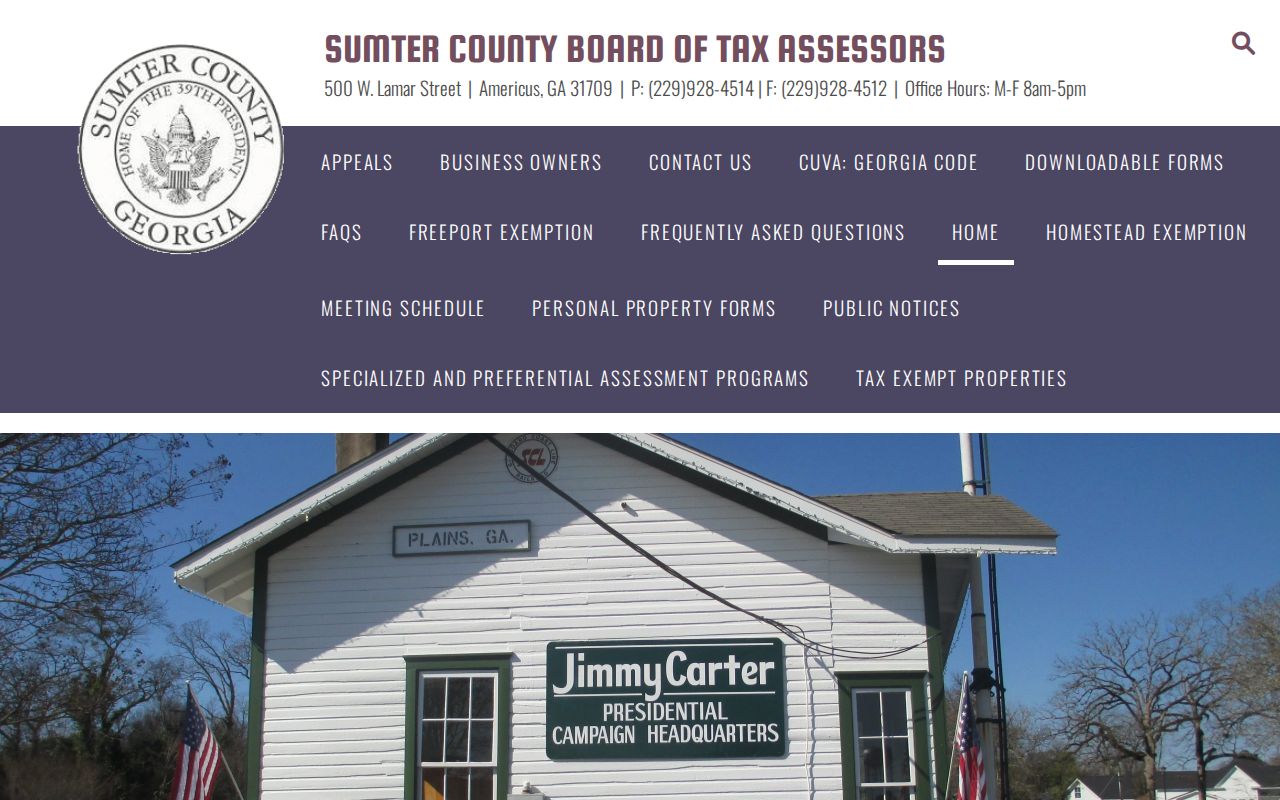
The official entry page starts the search. Pair any displayed owner with the parcel number and the newest deed rather than stopping at the first name.
Monitor Future Sumter Filings With FANS
The free Filing Activity Notification System can alert you to new activity. It sends word when selected names appear in future real-estate filings. It looks forward only and relies on clerk-indexed data. It neither searches old filings nor guarantees a complete and current notice.
FANS supports deed-fraud awareness once you have identified an owner of record. Still, the official index and the document itself control any conclusion about Sumter County ownership.
Choose the notification name to match likely index forms. Use a full personal name or the exact entity name. A match signals a filing worth review. It does not prove the filing changed ownership or that the indexed person signed it.
Use Sumter Ownership Terms Precisely
These terms prevent common false conclusions when answering who owns a Sumter County property.
- Owner of record
- The person or entity displayed by the official roll for the parcel.
- Grantee
- The party receiving the interest in a recorded deed.
- Situs address
- The land's physical address, distinct from owner mail.
- Title
- The legal ownership interest, which a public name result alone cannot establish.
A deed can also reserve a life estate or name remaindermen. Read past the grantee line; that extra step may be essential to knowing who truly holds Sumter County title.
Confirm the Sumter County Owner in the Newest Deed
GSCCCA's standard real-estate index includes Sumter County deed data from January 1, 1999. Older material was added unevenly. Results can carry county code, book, page, instrument ID, filed date and time, and instrument type. They may also show property description, district, land lot, lot, subdivision, block, and indexed grantor and grantee names. Match several of these fields to the parcel. Do not lean on the grantee alone.
Inspect the instrument type closely. A warranty deed, quitclaim deed, administrator's deed, estate deed, or sheriff's deed each carries different context. Security deeds, assignments, and releases concern financing or encumbrances. Do not read them automatically as a new transfer. Images and printing may depend on account and fee rules. If the online result is absent, give the clerk the names tried and the approximate date. Include the parcel number, the property description, and any book and page citation.
Keep Sumter Legal Descriptions When Addresses Change
A street address is a shaky anchor. Sumter County can rename a road, retire a house number, or reassign a frontage altogether. Legal descriptions hold up better. Land lots, subdivision names, and block and lot numbers describe the land itself. They do not just track where the mail goes.
The plat and deed chain backs that up. GIS fields such as `PRPRTYDSCRP`, `SUBDIV`, and `PAGEPARCELID` can be laid beside the deed to confirm a match. Block and land-lot keys help too. The Freeman Subdivision trail shows how well this works. Parcel 22 5 6 ties to Plat Book 12 page 210. It also ties to Deed Book 1214 page 213, land lots 175 and 185 in the 27th District, and calls along the railroad and Bill Cross Street. Those Sumter County property records references pin down a tract. They work even when the modern address is weak.
Set Limits on a Sumter County Owner Lookup
Every owner lookup has limits. The Sumter County tax roll can name the owner of record. Yet it says nothing about who actually occupies the place. It also cannot reveal every beneficial interest or settle an unrecorded claim. A trust or an entity may hold title as grantee. Life-estate or remainder rights only show up in the instrument itself. Georgia law protects qualifying address information. Sumter County runs a nondisclosure process that reaches both the tax and GIS systems.
Not proof of title. A displayed owner is not a title opinion. Use records for lawful property research and never to stalk, target, or harass anyone.