
Build a Backward Sumter County Deed Timeline
A deed timeline is the backbone of any former-owner search in Sumter County. Start from a known parcel and list each conveyance in reverse order. For every transfer, record the parties and the deed type. Also note the recording date and the deed reference. Each entry points back to the prior owner, so one step reveals the next.
| Transfer date | Grantor → grantee | Deed type | Book/page or instrument |
|---|---|---|---|
| Newest recording | Seller or transferor → present grantee | Warranty, quitclaim, estate, foreclosure, tax, or other deed | Copy exactly from GSCCCA |
| Prior acquisition | Earlier grantor → the newest deed's grantor | Instrument shown in that party's grantee results | Book/page plus legal-description match |
| Next earlier link | Repeat with the previous grantor | Note corrections or unusual transfers | Preserve instrument ID and recording date |
| Before online coverage | Continue through index pages and deed books | Historic recorded conveyance | Clerk, Archives, microfilm, or FamilySearch reference |
GIS fields may list a grantor, grantee, sale date, and sale price. They still are not the record. The deed index is the transfer record to follow in a Sumter County property search. A timeline exposes gaps, such as a missing acquisition, a changed legal description, or an estate transfer, before the hunt jumps to a similarly named former owner of record.
Start With Sumter County's Newest Recorded Deed
Start at the GSCCCA Real Estate Index. The subject parcel's owner, parcel number, subdivision or lot, street address, and legal description all help locate the newest conveyance. Name and book/page searches are supported. So is property searching by subdivision, unit, block, and lot in participating counties. Limit the search to Sumter County and record the instrument type, parties, date, and reference. The statewide portal is a starting index, not a finished chain of title.
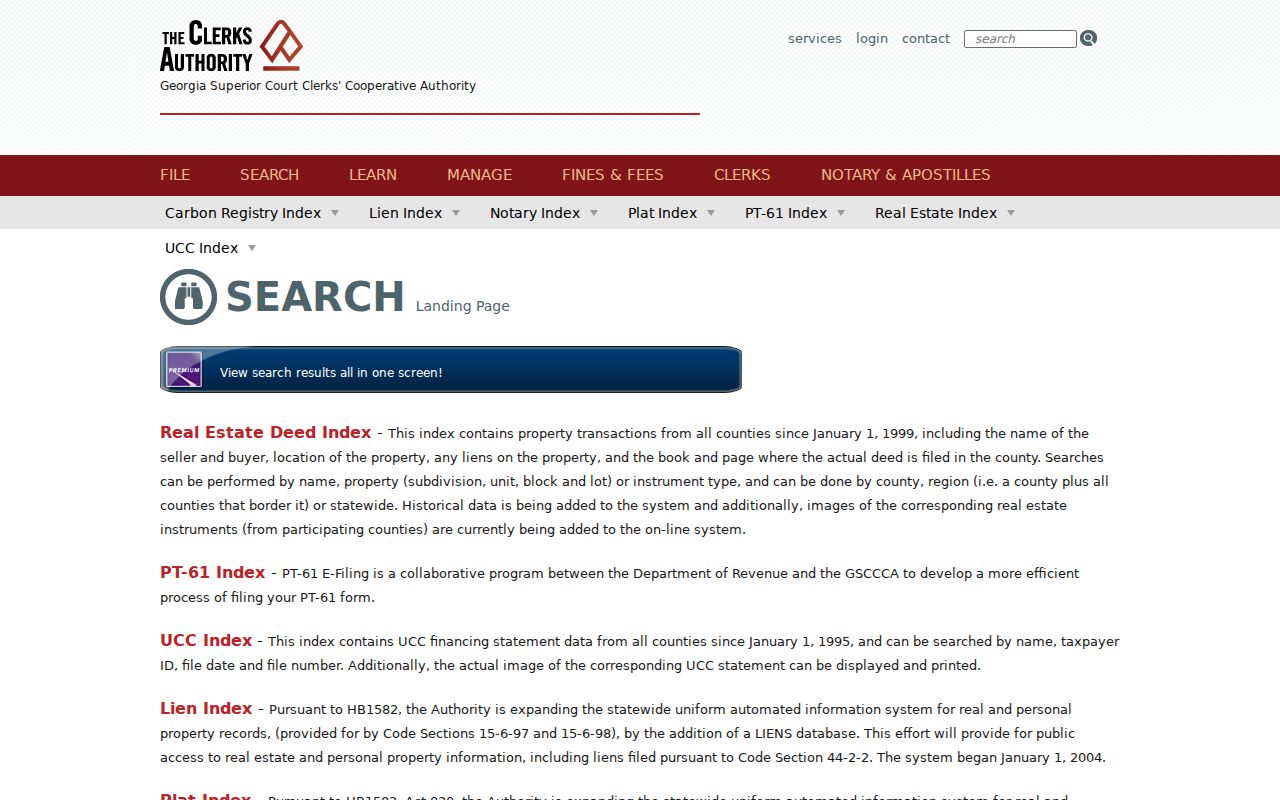
Images and premium functions may require an account or payment. Keep enough index data on hand. With the book, page, and instrument details, the clerk can still pull the right deed record. This helps if the image stays out of reach.
Note: A security deed documents financing rather than a sale. Identify the conveyance deed that actually changed title.
Test Every Grantor and Grantee Name Variant
Georgia's official deed index lists surnames first, then a comma and given name. Test more than one format. Ordinary order, initials, middle names, married names, and spelling variants all deserve a query in the Sumter County index. Company names appear with and without punctuation. Trusts may be indexed under the trust, a trustee, or both, while estates can appear under "Estate of," an administrator, an executor, or an estate-deed code.
Names repeat in Georgia. Same-name parties require a land match. Compare the location, parcel key, book and page, legal description, acreage, and boundary calls before trusting any grantor-to-grantee link in the chain of title.
Walk the Sumter County Chain in Reverse
The search runs in reverse for a reason. The newest deed names the grantee. That name becomes the next grantor query, and the controlled handoff repeats until the target year arrives or the electronic deed index for Sumter County runs out.
- Find the newest deed and confirm that its grantee, land description, and recording reference match the subject parcel.
- Enter the grantor from that deed as a grantee in an earlier date range to locate how that former owner acquired the land.
- Compare legal descriptions; note splits, combinations, exceptions, corrections, and changed acreage before accepting the match.
- Repeat with each earlier grantor. At the 1999 standard-index boundary, continue through clerk-held indexes and deed books.
- Grantor / grantee
- The party transferring an interest and the party receiving it.
- Chain of title
- The ordered sequence of instruments affecting ownership of the same land.
- Reverse index
- An index organized by grantee, useful for finding how a former owner acquired title.
- Warranty / quitclaim deed
- A warranty deed carries title covenants; a quitclaim transfers whatever interest the grantor has without those promises.
The Sumter County Online Trail Starts in 1999
GSCCCA puts January 1, 1999 as the start of its standard Deed Index for Georgia counties. That is a statewide data start. It is not the start of county ownership. The lien and plat databases open in 2004, UCC data reaches back to 1995, and older deeds live in Sumter County's own books.
| Deed index | Standard statewide coverage from January 1, 1999; historical additions vary. |
|---|---|
| Plat index | Operational statewide database from January 1, 2004. |
| Lien index | Statewide lien-docket coverage from January 1, 2004. |
| UCC index | Database coverage begins January 1, 1995. |
Coverage limit. The standard online deed index starts in 1999. Earlier former owners must be traced through clerk indexes, permanent deed books, microfilm, or archives.
Continue Into Sumter's Permanent Deed Books
Sumter County was created on December 26, 1831. Its nineteenth-century paper trail began in clerk-held deed, court, tax, probate, and county books. The Georgia Archives research guidance points to county records on microfilm and FamilySearch. Images are often browse-only. Viewing works by county, book, or index rather than by a name search.
The Archives finding aids list Sumter Superior Court deed books 184 through 212 and Inferior Court records from 1837 to 1922. Those are documented holdings. Book 184 was not necessarily the county's first. No courthouse fire or oldest surviving deed-book date is published. A missing online result is not a destroyed record. For older material, the Georgia Archives route is the documented fallback.
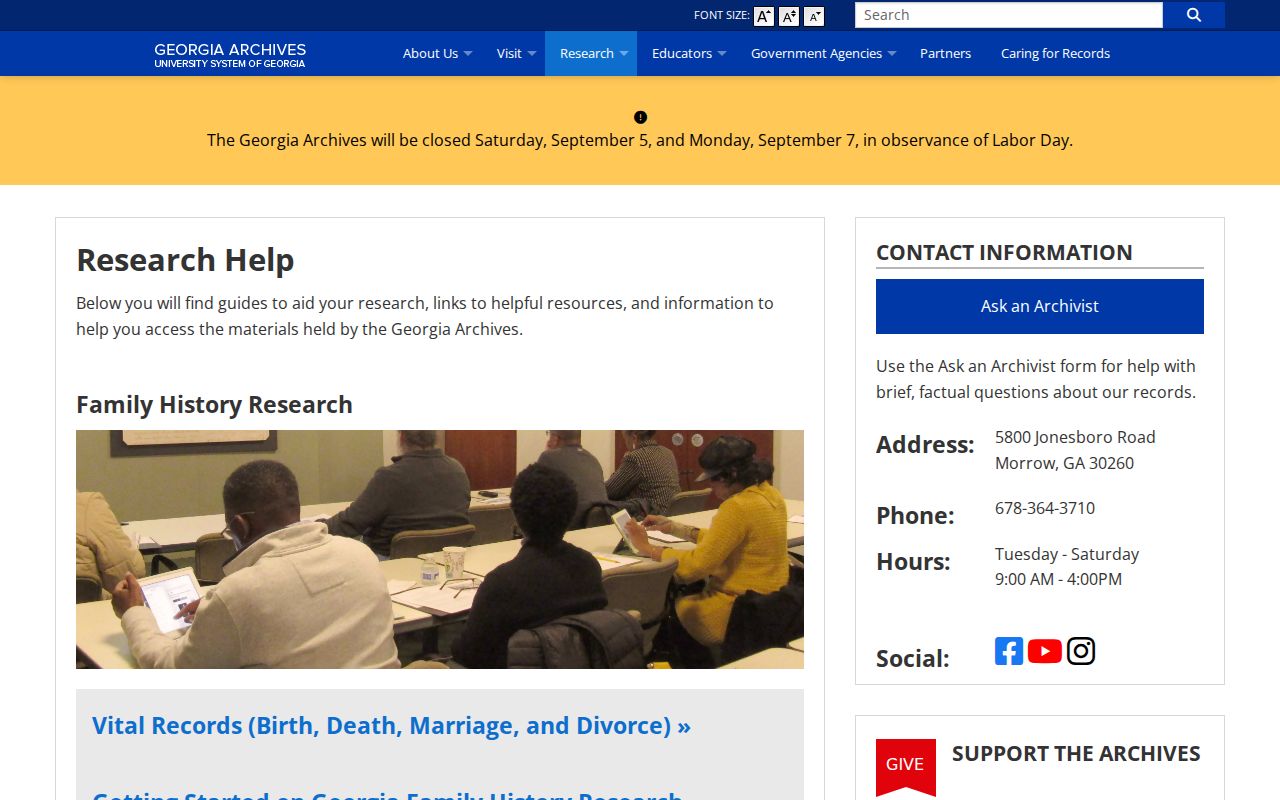
Identify the book and page from an index entry first. Without that step, a long microfilm run of Sumter County deed records can become needlessly broad when the clerk or reader finally loads the reel.
Resolve Estate Transfers in the Ownership Chain
A death interrupts the seller-to-buyer pattern. Estate paperwork fills the gap. Look for deeds from estates, court orders, trustee's deeds, gift deeds, and powers of attorney. The Sumter County Probate Court handles wills, administrators, guardians, estate disputes, and genealogy records, though it offers no online case search. For a deceased former owner, probate and deed research can connect an administrator deed, a year's-support order, or an estate transfer. An old tax-roll name is not conclusive title. Search the decedent and the representative. Then tie the result to the same legal description. A compact parcel field can lag behind the deed itself.
Note: A life estate may name a life tenant and remaindermen in the deed even when a brief parcel entry shows only one interest.
Follow the Freeman Subdivision's Recorded Clues
A Sumter County parcel-sale notice shows exactly how to anchor former-owner research. One notice tied parcel 22 5 6 in Freeman Subdivision to Plat Book 12, page 210. It also named Deed Book 1214, page 213. It cited land lots 175 and 185 in the 27th Land District. And it included boundary calls along the railroad and Bill Cross Street.
Those recorded clues beat a street address. Addresses shift, parcels get split, and older deeds predate modern numbering. A plat reference can bridge the modern GIS parcel back to its earlier deed description. So can a land lot, a creek, a road, an acreage figure, or an adjoining owner. Write down every book and page you cite. Then move to the next former owner with property records intact.
Note: Match each boundary call against the plat before trusting any single clue.
Know Where Sumter County Ownership History Ends
Every ownership search in Sumter County reaches a stopping point, and where it stops depends on the records that survive, the land description, and the question you are asking. GSCCCA handles the modern stretch of deed records. Older transfers take more digging. The Sumter County Clerk of Superior and State Court holds recorded real-estate instruments and assists visitors at 500 W Lamar Street in Americus, Monday through Friday from 9 a.m. to 5 p.m. Mail goes to PO Box 333, Americus, GA 31709, and the office answers its phone at 229-928-4537.
For earlier generations of the parcel, keep working through deed-book indexes, Archives microfilm and finding aids, FamilySearch, and the courthouse itself. Historic plats help fix subdivision, lot, and boundary identity when a parcel number will not reach back far enough. Georgia Historic Newspapers can supply context around an Americus property or a public notice. Treat a newspaper account as a lead, though, never as a stand-in for a recorded transfer. The recorder's own records remain the anchor.
Lawful use. Former-owner records support house history, estate work, purchase diligence, and title research. Never use ownership history to track, harass, threaten, or harm a living person.
No online chain, index entry, GIS field, or private timeline amounts to a title opinion. When the chain touches a transaction or a legal right, pull the underlying documents and get qualified professional review.